Weather Patterns Reshaping Betting Lines on Football Pitches and Racing Circuits
Jakob Keller · Aug 22, 2026
Weather Patterns Reshaping Betting Lines on Football Pitches and Racing Circuits
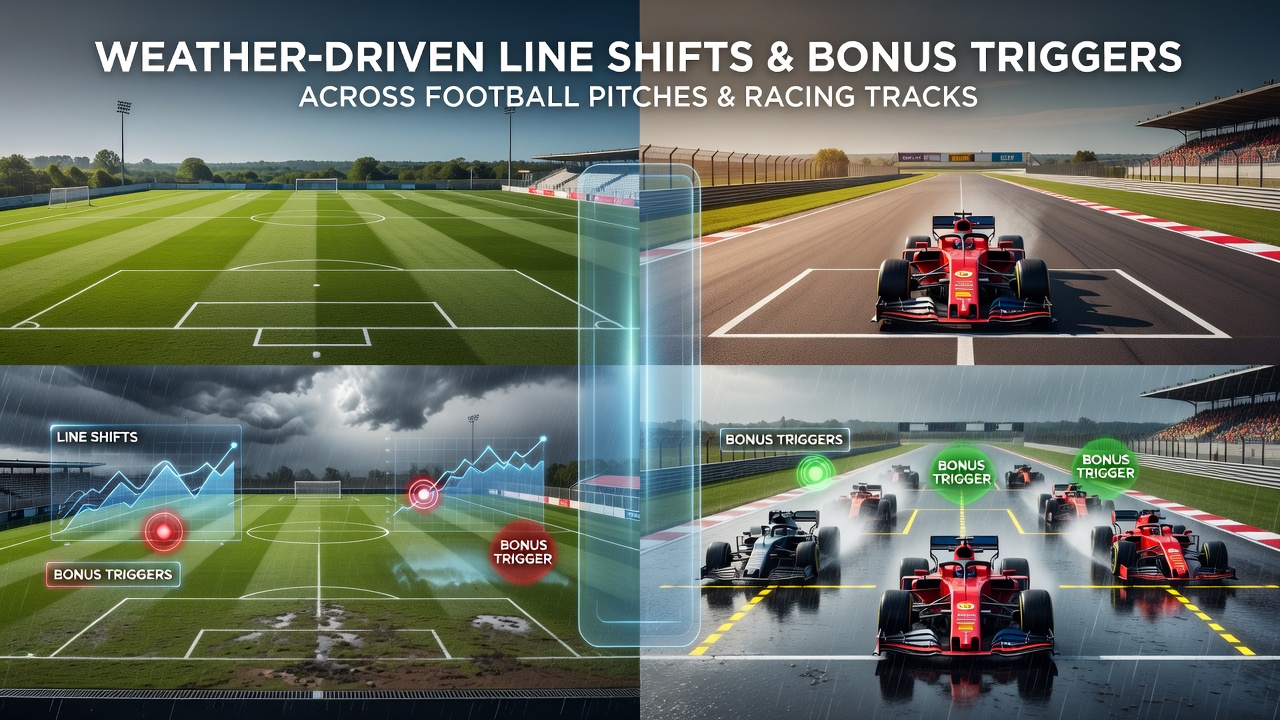
Weather conditions have long altered the physical properties of football pitches and racing surfaces, which in turn prompt adjustments in betting markets across multiple jurisdictions. Data compiled by meteorological agencies shows that rainfall amounts exceeding 10 millimeters per hour correlate with measurable changes in ball behavior on grass surfaces, while wind speeds above 25 kilometers per hour influence both passing accuracy in football and stride patterns in equine events. These environmental factors create documented shifts in pre-match and in-play odds as bookmakers recalibrate probabilities based on updated forecasts.
Football Pitch Dynamics Under Variable Conditions
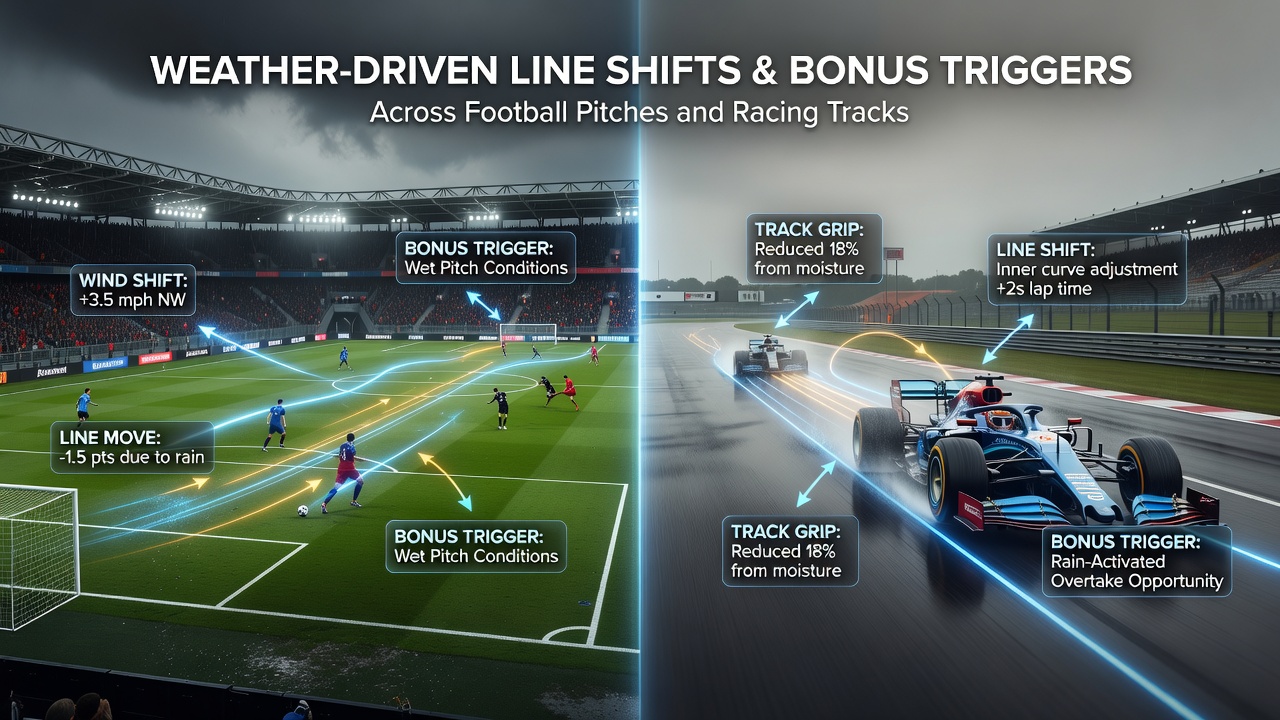
Heavy precipitation softens turf layers and reduces friction coefficients, leading operators to adjust totals markets for goals and corners within hours of updated forecasts. Observers note that in matches played during sustained August 2026 downpours across northern Europe, average goal tallies dropped by approximately 0.3 per game according to aggregated fixture data. Wind direction further modifies set-piece outcomes, prompting line movements on player-specific prop bets when gusts exceed thresholds recorded by on-site anemometers.
European sports science institutes have tracked how pitch moisture content above 25 percent alters player sprint distances and passing completion rates, information that feeds directly into algorithmic pricing models used by betting platforms. Those models incorporate real-time radar feeds to trigger automatic line revisions, a process that accelerates once official weather warnings are issued by national meteorological services.
Racing Track Surfaces and Performance Metrics
Equine racing surfaces respond rapidly to precipitation through changes in ground firmness classifications, commonly labeled as firm, good, soft, or heavy. Records maintained by Australian racing authorities indicate that transitions from good to soft ground typically extend winning times by 3 to 5 seconds over 1400-meter distances, prompting immediate adjustments to place and quinella markets. Wind exposure on exposed tracks can further modify sectional timings, particularly when crosswinds exceed 30 kilometers per hour.
Industry reports from North American regulators document similar patterns on dirt and turf courses, where moisture penetration rates determine whether tracks remain fast or shift to sealed surfaces. These classifications directly influence speed ratings employed by handicappers and, consequently, the odds displayed to punters. Automated systems monitor soil sensors installed at multiple points along straights and bends, feeding data streams that accelerate line movements ahead of race declarations.
Bonus Activation Mechanisms Tied to Weather Events
Operators frequently activate promotional mechanics when forecasts indicate significant weather disruption, such as enhanced accumulator insurance or cashback offers triggered once precipitation thresholds are met. Regulatory filings from Canadian provincial gaming bodies reveal that such activations increased by 18 percent during the 2025-2026 wet seasons compared with drier periods, reflecting coordinated responses to anticipated customer engagement spikes. These triggers operate alongside standard line adjustments rather than replacing them, creating layered incentives that activate automatically upon confirmation from independent weather data providers.
Systems employed by international betting exchanges integrate satellite imagery and ground-station readings to verify conditions before releasing bonus codes, a safeguard designed to maintain compliance with advertising standards across jurisdictions. Research from university-affiliated sports analytics centers indicates that such weather-linked promotions correlate with higher participation rates in affected regions without altering underlying probability calculations.
Integrated Forecasting and Market Responses
Betting platforms now combine ensemble weather models with historical performance datasets to project line movements several hours in advance. European Union-funded studies on climate variability in sports demonstrate that forecast accuracy improvements since 2023 have reduced the lag between meteorological updates and odds revisions from 90 minutes to under 30 minutes in many cases. This compression allows traders to maintain tighter margins while responding to evolving conditions on pitches and tracks.
August 2026 patterns across the UK and continental Europe featured prolonged dry spells punctuated by localized thunderstorms, producing distinct clusters of line activity on both football and racing fixtures. Market data from those periods shows that over/under markets experienced the largest intraday swings when combined wind and rain events coincided with kickoff or race start times.
Conclusion
Environmental monitoring continues to shape betting infrastructure as operators refine data pipelines linking atmospheric readings to market adjustments. Regulatory frameworks in multiple regions require transparency around automated triggers, ensuring that weather-driven promotions and line revisions remain auditable. Continued integration of sensor networks and predictive modeling supports consistent responses to conditions that alter both athletic performance and associated wagering products.